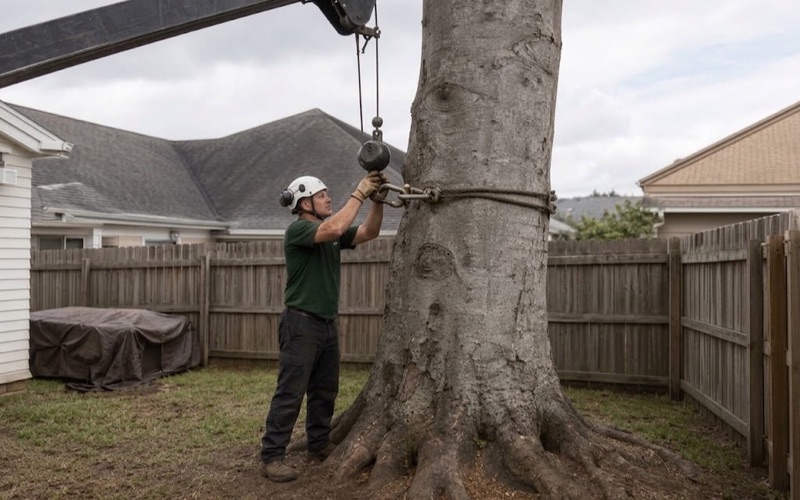
Spring Hill Tree Removal has been doing tree service in Murfreesboro for more than twenty years, and on this side of Rutherford County the first question is rarely what a removal costs. It is whether the tree is one the City can already require you to deal with, and on what timetable. Murfreesboro’s tree ordinance reaches private property, and it gets there through nuisance and abatement language rather than through a removal permit.
That distinction decides how urgent a job is. Nothing in the ordinance makes you apply for a permit to take down a tree standing in your own back yard; what exists instead is a process the City can open when a tree threatens the public, ending in a deadline, a lien and a fine. A homeowner who has just found a registered letter in the mailbox is working against a clock, and a homeowner who has not is free to plan the work.
So we read the ordinance for the city a tree actually stands in, rather than assuming Middle Tennessee answers the question the same way from one municipality to the next. On a Murfreesboro property that means knowing which section a tree falls under, what the letter is asking for, and what the City will help pay toward a removal once a tree has become a hazard.
When a Murfreesboro Tree Becomes a Public Nuisance
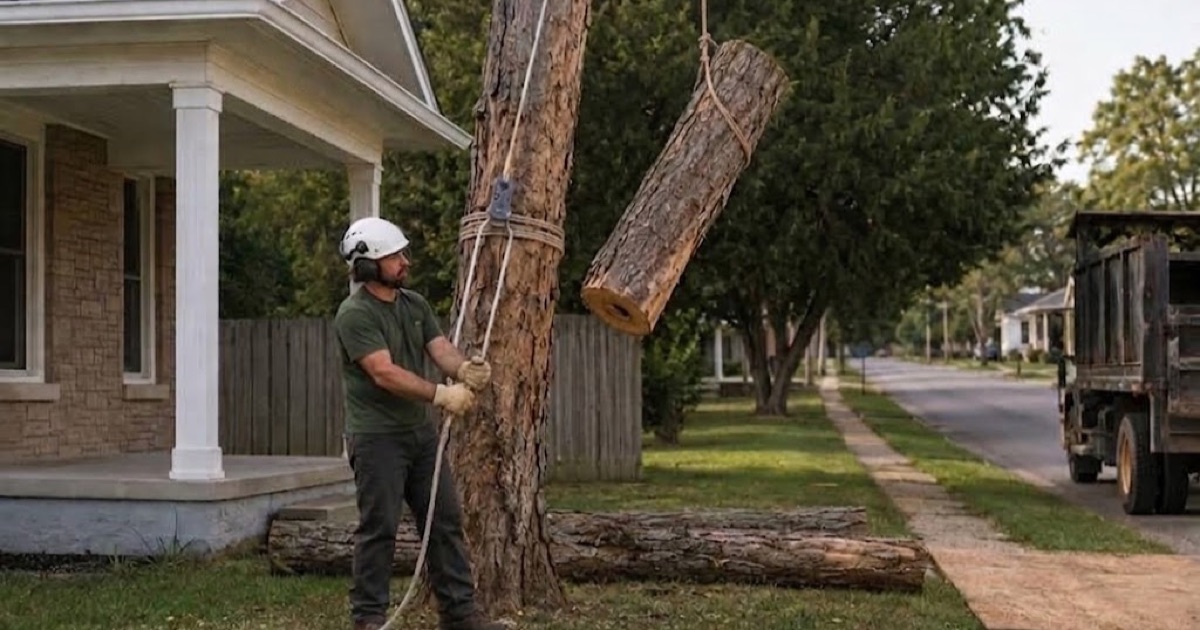
The ordinance declares two separate things to be public nuisances, and both reach trees on city-owned and private property alike. One of them is about the condition of a tree. The other is about what a tree is blocking, and it is measured in feet.
A tree that has become an imminent danger
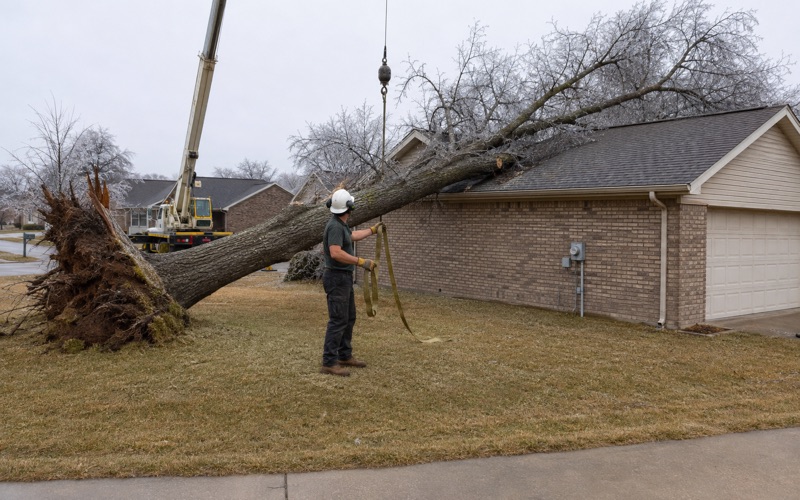
A tree that by reason of its location or its condition constitutes an imminent danger to the health, safety or welfare of the general public is declared a public nuisance under section 34-8(a)(1). Location counts as much as condition there. A leaning stem over a sidewalk can qualify where the same tree standing in the middle of a lot would not.
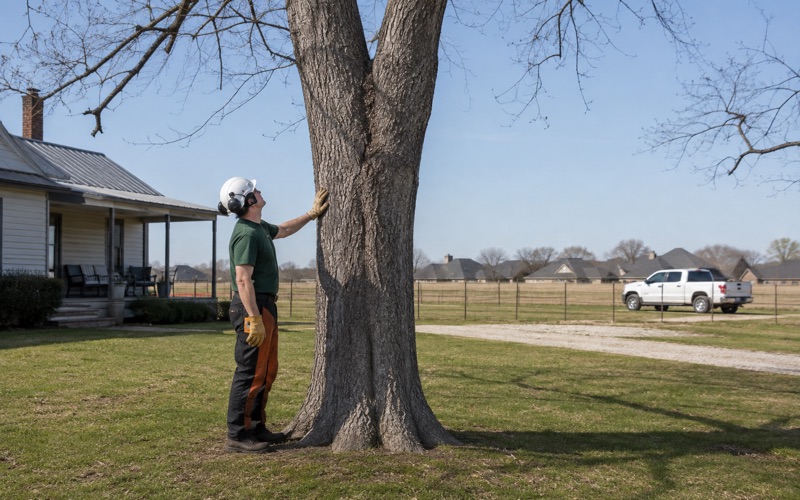
That is a judgment call, and it is worth having it made before somebody else makes it for you. We look at the whole tree, from the root flare and the root collar up through co-dominant stems, included bark, a conk at the base and deadwood in the crown. We will also tell you when crown cleaning, deadwooding, or cabling and bracing resolves the defect and the tree can stay.
Clearance over the sidewalk and over the street
The second nuisance is dimensional. Any tree, shrub or other plant, on city-owned or private property, that obstructs the free passage of pedestrian traffic below seven feet of clearance or vehicular traffic below 15.5 feet of clearance, or that obstructs a street light or a traffic sign, is declared a public nuisance under section 34-8(a)(2).
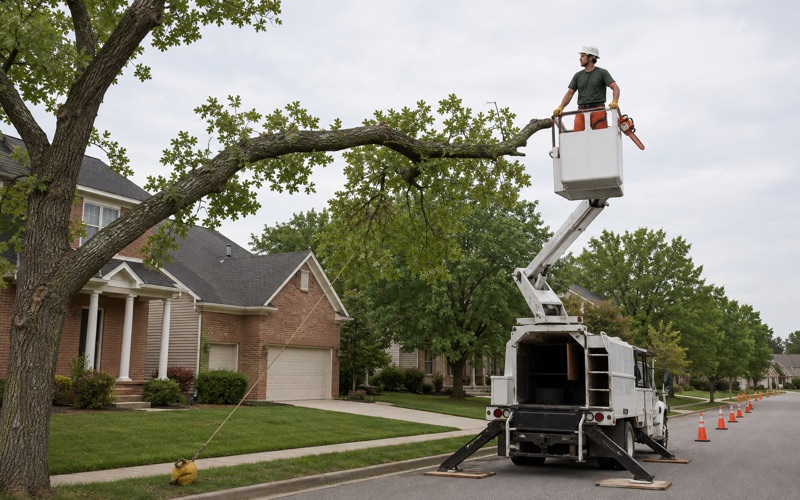
Those two numbers are the working spec for crown raising on any corner lot here, and they are not the same target. The limb over the walk and the limb over the pavement come off at different heights, so we measure both before a rope goes up.
We work pruning to the objectives and cut types the ANSI A300 standard defines, and we do not top trees. The ordinance takes the same position on the public side: topping, defined as cutting limbs back to stubs larger than three inches within the crown to the point that the normal canopy is removed and the tree is disfigured, is unlawful as a normal practice on any street tree, park tree or other tree on public property.
Looking for tree-removal closer to White Bluff? See Tree-Removal Services in White Bluff.
The Thirty-Day Notice, the Lien and the Hearing
When the City treats a tree on private property as a nuisance, abatement runs on a documented track. Written notice must be served personally or sent by registered mail to the person to whom the last preceding year’s tax bill was sent, which is a billing address and not necessarily the person living under the tree. Rental property, an estate in probate and a recently sold lot are all places where that letter lands somewhere other than the front door.
The notice has to allow no less than thirty days for the nuisance to be eliminated. That window can be shortened only where there is imminent danger to the public, which is the same standard the nuisance definition itself uses.
What happens if nobody abates it
If the nuisance is not abated by the date the notice specifies, the City is authorized to abate it, and the reasonable cost of that abatement is filed as a lien against the property. The bill does not go away when the tree does. It attaches to the property and waits for the next closing.
Violation of any provision of the tree ordinance is separately declared a misdemeanor, subject to a fine of up to five hundred dollars and costs, in addition to any costs of corrective action the City incurs. Between the lien, the fine and losing control of who does the work, the cheapest version of this is almost always the one that happens inside the thirty days.
The Tree Board and the owner’s right to be heard
An owner who disagrees with the notice is not stuck with it. The notice must inform the owner of the right to a due process hearing before the Tree Board, and the running of the time limits is suspended from the written request until the Board renders its decision. Asking for the hearing stops the clock rather than spending it.
The Tree Board is five citizen members appointed by the Mayor with City Council approval, serving without compensation, and it hears appeals and requests for variances under the ordinance. They are reading a tree none of them has climbed, from whatever is put in front of them.
That is what a written condition report is for. We write ours to stand on its own, with species, diameter at breast height, the defects we actually observed, and whether the tree warrants removal or can be retained with pruning, cabling or bracing, in a form a homeowner can hand to the Board, to an insurer, to a neighbor or to an HOA architectural review committee. Estimates are free, and we will give you a straight answer on whether a job is worth an insurance claim.
Where a Permit Really Does Apply
The permit language in the ordinance is real; it just does not point where most homeowners assume it does. It points at city property, and at the planting strip between the sidewalk and the curb. Knowing which side of that line a trunk stands on is the difference between scheduling a crew and filing an application first.
Trees on city property
Before anyone other than the City Arborist, the Arborist’s designee or a contractor employed by the Arborist may plant on city-owned property, or treat, prune, remove or otherwise disturb any tree, shrub or plant located on city property, a permit is required. The application has to be made not less than forty-eight hours before the work is to be done.
The applicant must also give Notice of Intent to Excavate to Tennessee One Call, a requirement that reaches stump grinding and root excavation and not only planting. The permit itself is issued at no cost and carries a definite expiration date, a violation of any of its terms renders it null and void, and a notice of completion must be provided within five days of the completion date so the work can be inspected.
The treelawn between the sidewalk and the curb
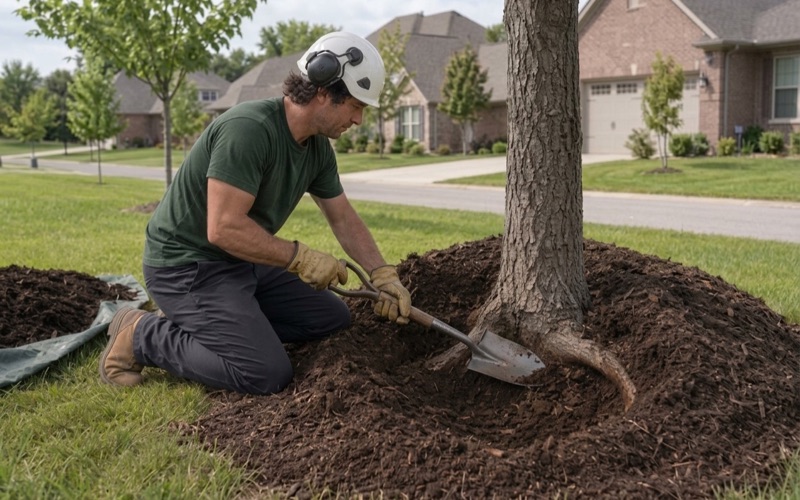
No person or property owner may remove a tree from the treelawn without first applying for and procuring a permit. The owner bears the cost of removal, expressly including the stump, plus clean-up and replacement of all trees removed, to the standards set on the permit.
That last clause is the one that catches people out. A treelawn removal is not finished when the stump is ground, because a replacement tree is part of what was permitted, and we flag it at the estimate. A quote that ignores the replacement is not a quote for the job the permit actually describes.
Who is signing off
The City Arborist enforces the tree ordinance, supervises or inspects work performed under a permit, and can attach conditions to one. The position carries real requirements: a college degree in forestry, urban forestry, horticulture or a closely related field, a minimum of five years of practical experience, and no less than International Society of Arboriculture arborist certification, maintained throughout employment. Urban Forestry works out of 620 W. Main St.
Tennessee itself issues no tree-care or arborist license of any kind, so no contractor in this state holds a state arborist credential. What the state does require in Rutherford County is a Home Improvement Contractor license for residential projects from $3,000 to $24,999, which is a fair thing to ask any bidder about.
Debris, Disposal and Help Paying for a Hazard Removal
The City states on its own tree services page that anyone contracted to perform tree services is also required to haul off the debris they create, according to city ordinance. That is worth reading twice before comparing bids, because leaving the trunk wood stacked at the curb free of charge is a published practice elsewhere in the county, and here it is not a saving.
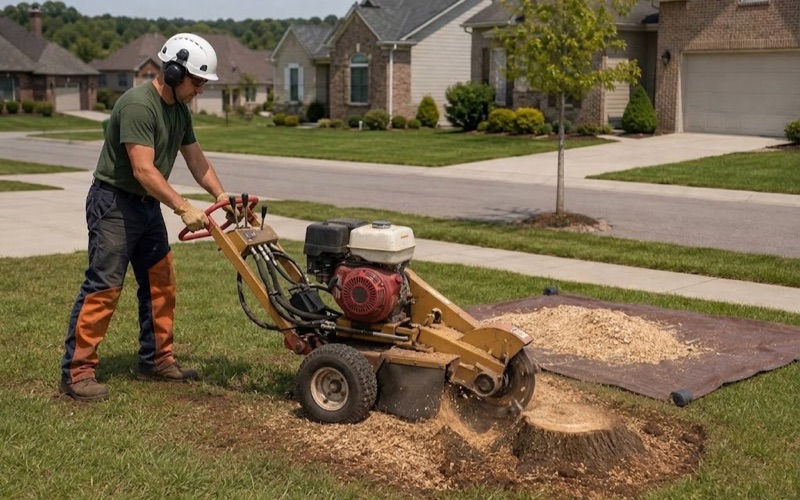
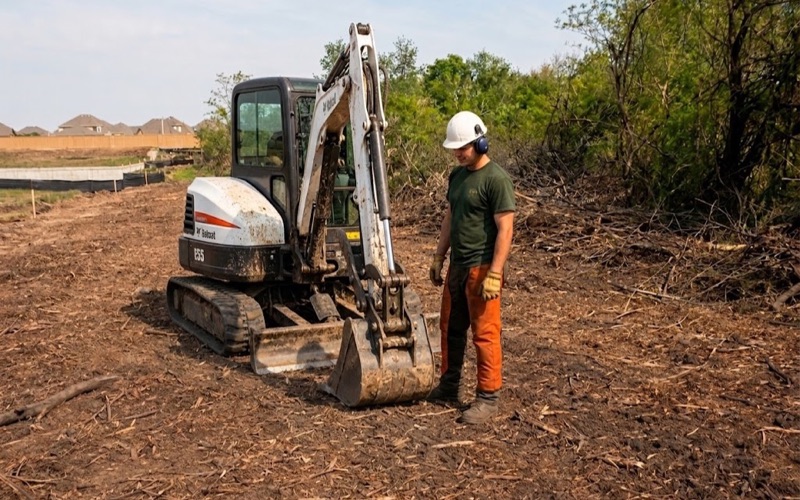
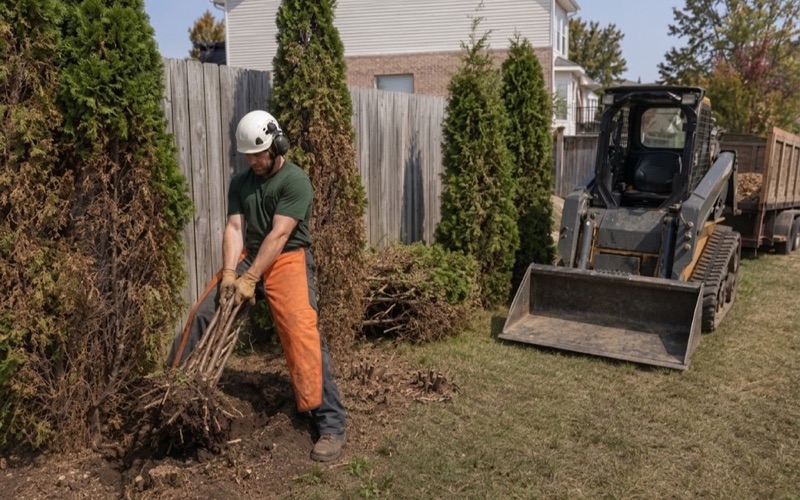
We put the inclusions in writing before a saw starts: the trunk rounds, the stump, the grindings and the chips, each one named as in or out. Disposal is priced for the city we are actually working in rather than averaged across a region, and compact tracked equipment gets us through a back-yard gate on most subdivision lots, so a tree behind a house does not automatically become a crane job.
The forgivable loan for a hazardous tree
The City’s Community Development Department administers a hazardous tree removal assistance program: a five-year to fifteen-year forgivable loan to eligible homeowners for the removal of trees that have become hazards. The department can be reached at 615-890-4660.
We do not administer that program, approve anyone for it, or have any part in whether it pays out. The City’s published page states the term and eligibility in a single paragraph and does not publish income limits, forgiveness mechanics or what counts as a qualifying hazard, so that office is the only place to get them. What we can do is hand you a written scope and price to take into the conversation.
What grows here, and what runs overhead
Murfreesboro is the seat of Rutherford County and had a population of 152,769 at the 2020 census, and the reference for what this ground grew before the subdivisions arrived sits inside the city limits, in the limestone cedar glades at Stones River National Battlefield. The native woody vegetation of the Inner Nashville Basin runs to post oak, chinkapin oak and eastern redcedar, with redbud, winged elm and blue ash alongside them.
Overhead is the other constraint on a removal here. Middle Tennessee Electric clears a right-of-way forty feet wide, twenty feet on each side of the line, and we check which utility actually serves an address before quoting anything near a conductor instead of assuming it from what runs along the street.
- 20+ Years in Middle Tennessee
- Free Estimates
- Written Scope Before Work Starts