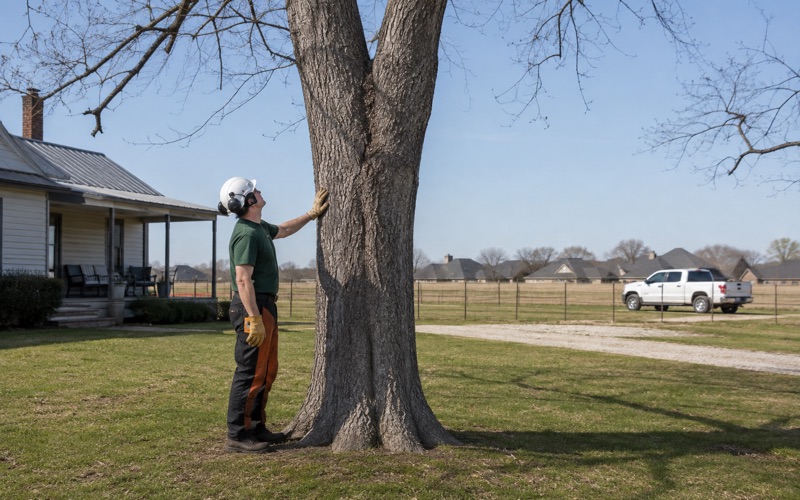
Spring Hill Tree Removal has handled tree removal in Columbia for more than twenty years, and on a Columbia address the first thing we settle is not a city permit. It is where the power line runs and how the ground underneath it is kept.
That is not the usual order of operations, but Columbia is not the usual case. The rule a crew here has to work to is published by the electric utility, and the city’s own tree language turns out to be about what gets planted on a development site rather than about what a property owner may cut down.
So our estimate starts with the line, the access and the drop zone. We confirm which utility owns the conductor at the address before we price anything near it, we put the inclusions in writing before the first cut - trunk rounds, stump, grindings and chips - and we will say plainly when a tree can be cabled, braced or pruned instead of removed. Estimates are free.
Columbia Does Not Issue a Homeowner Tree Removal Permit
Homeowners ask us for the application, and in Columbia we have not been able to find one. The tree provisions we can locate for the city sit inside Zoning Ordinance No. 4400, administered by Development Services and its Planning and Zoning Division; the version the city posts is labeled Zoning Ordinance 4400 April 2025.
We treat that as an absence rather than a guarantee, because searching an ordinance is not the same as reading it end to end. What we can say is that nothing we found asks a private property owner to apply before taking a tree down, and everything we did find is aimed at development instead.
What Ordinance No. 4400 Actually Regulates
The city’s tree language is landscaping, screening and buffer standards attached to site plan review. It governs planting on developed and redeveloped sites, and it is a standard a builder or a commercial owner meets when plans are reviewed, not a form that comes before a saw.
The June 2024 Article 4 text amendment is the clearest example. It requires screening by a landscape buffer at least 10 feet in width consisting of two canopy trees and two accent trees per 100 linear feet of property frontage. On a commercial clearing job that number is worth knowing before equipment arrives, because the replanting obligation on the finished site is already fixed while the lot is still wooded.
The Boards That Do Review Work
The Planning and Zoning Division also staffs the Municipal Planning Commission, the Board of Zoning Appeals and the Historic Zoning Commission. The last of those reviews work on properties inside Columbia’s historic zoning overlay, where a site change is looked at as a change to the property rather than as tree care.
Outside the city limits the question moves to the Maury County Building and Zoning Office at 5 Public Square, which regulates land use in unincorporated Maury County - where a large share of the wooded acreage around the city actually sits. The County Commission adopted a new county Zoning Ordinance on November 17, 2025, posted by the county as effective January 1, 2026.
One more thing people expect and Tennessee does not have: the state issues no tree care or arborist license at all, so nobody working on a tree here holds one. What exists is the state contractor license threshold, insurance and voluntary industry credentials. The separate Home Improvement license band does not extend to Maury County, so a residential job between $3,000 and $24,999 here carries no license requirement that the same job would carry in Davidson or Rutherford County.
Looking for tree-removal closer to Franklin? See Franklin Tree-Removal.
The Rule That Does Govern: Columbia Power and Water Systems’ Right of Way
The electric right of way inside Columbia belongs to Columbia Power and Water Systems, a municipal utility operating under the Board of Public Utilities of the City of Columbia, with an office at 201 Pickens Lane and a published number of (931) 388-4833. CPWS owns and clears that right of way, and it sets the clearance a crew must respect around an energized conductor.
That distinction is worth stating because CPWS is a city utility answering to a city board rather than a rural cooperative. When we quote work near a line here, the standard we are quoting against is the one CPWS publishes, and we check the serving utility at the address instead of assuming it from the county.
Twenty Feet, Ten Feet, and Which Number Applies
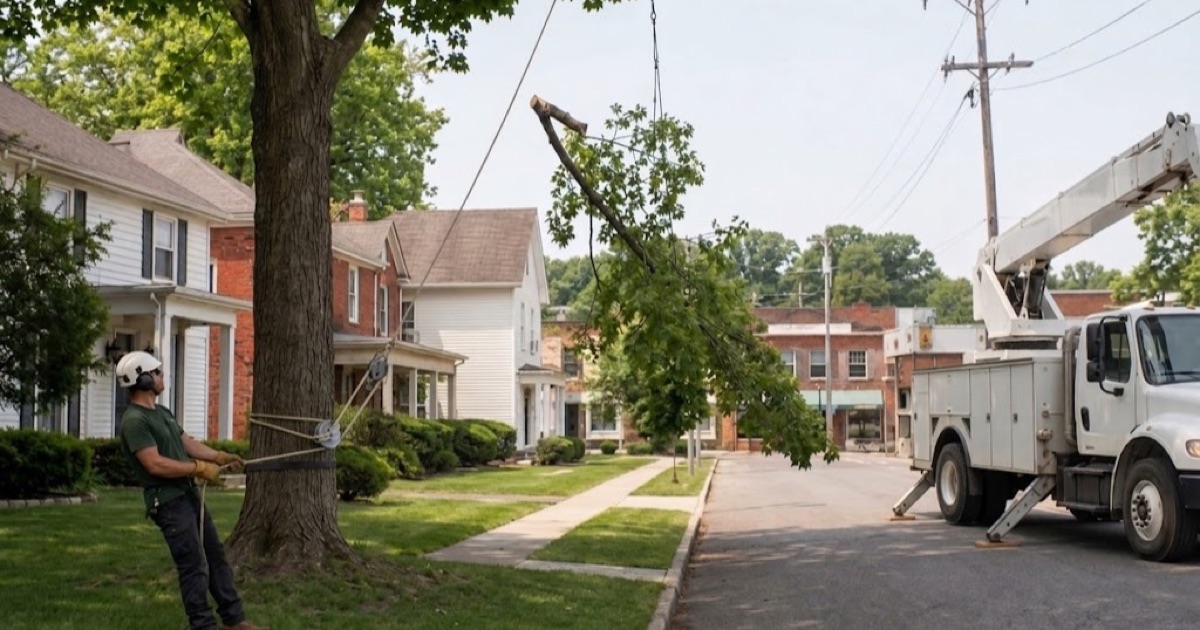
CPWS publishes twenty feet of clearance on each side of distribution lines in non-manicured areas, ten feet in every direction around primary voltage lines in manicured areas, and ten feet around open secondary lines. Those figures are not close together. The widest and the narrowest differ by more than double while describing the same kind of hardware overhead.
Manicured or Not, on the Same Block
What moves a property from one figure to the other is how the ground under the line is kept. Where a lawn is mowed and maintained up to the pole, the manicured distances apply. Where the back of a lot runs out into brush and rough ground, the non-manicured twenty feet on each side of the distribution line is the number.
Two neighbors on one street can be working to different clearances for that reason alone, and the tree itself has nothing to do with it. We read the ground condition and the line type during the walk-through, because guessing which one applies is how a crew ends up asking for an outage on the morning of the job rather than a week ahead of it.
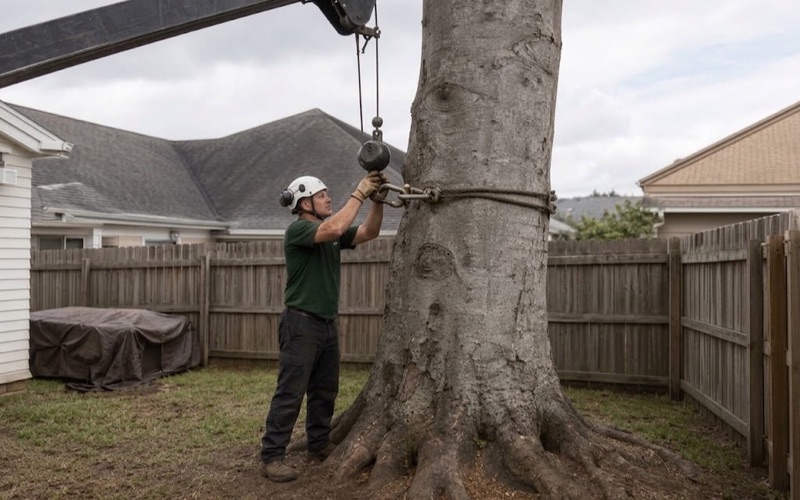
It also changes the shape of the removal. Wider clearance on a rough back line can mean the top comes down in small pieces on a rigging block with a friction lowering device at the base, sized to the working load limit rather than to what the bull rope would probably survive, where an open yard would have allowed three cuts and a drop.
Downtown, the Courthouse Square and the Arts District
Columbia’s historic core puts mature street trees over sidewalks, storefronts and parked cars, with overhead utility runs above them and narrow lots behind. There is no room for a drop zone anywhere in it. Almost nothing about those removals is decided by the tree’s condition; access decides the method.
Crane or Climb
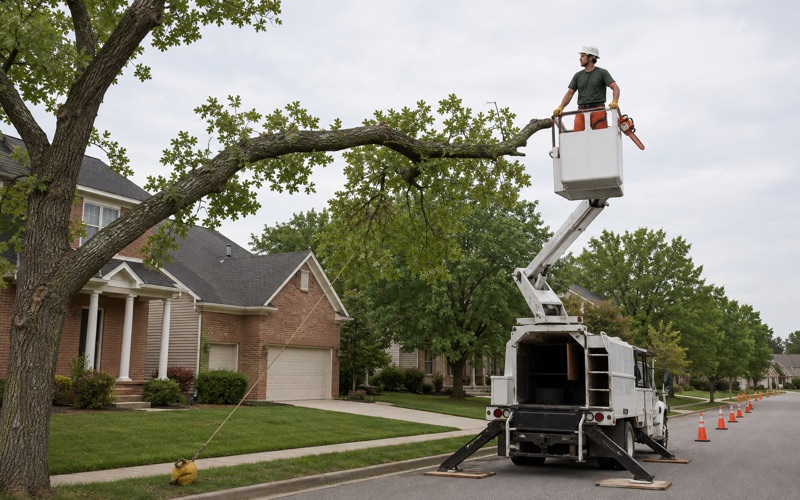
The two workable answers are a crane set in the street with the closure and traffic control that requires, or a climb and a piece-by-piece lowering through a rigging block. A spider lift reaches some of those positions without a crane at all, which is often the difference between a morning of work and a closed street.
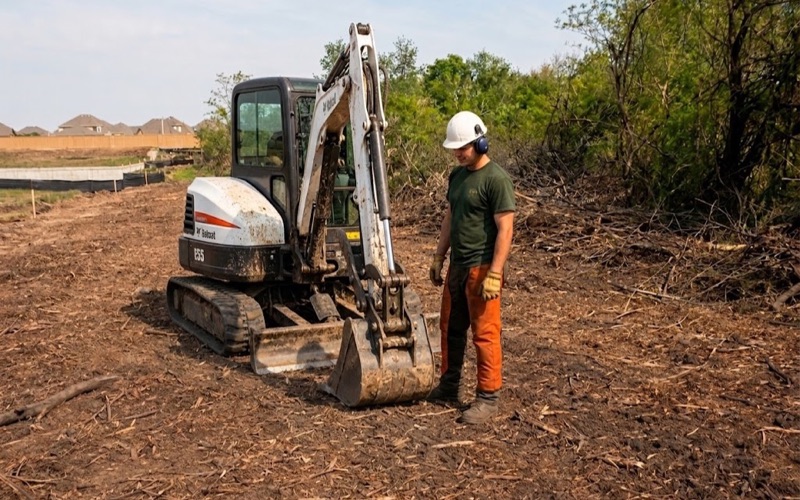
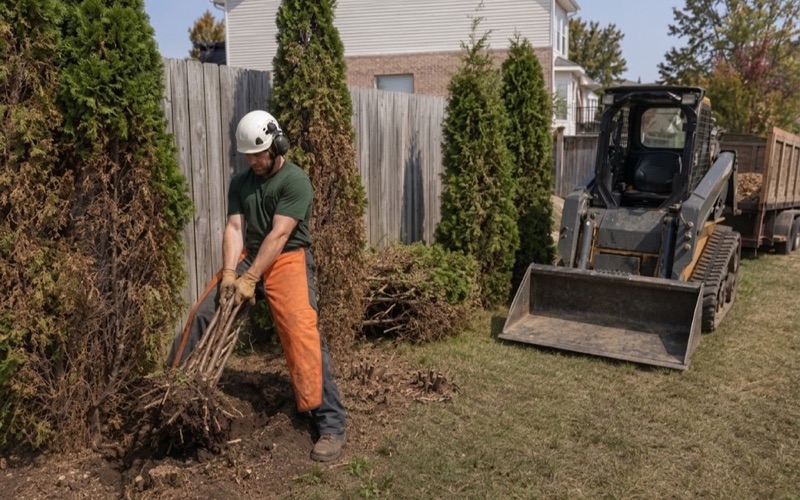
We say which one a job is before we quote it, and we say what that costs, because the choice between them is most of the price. Compact tracked equipment fits a back-yard gate, so a subdivision tree does not have to become a crane job. A tree over the square usually does.
What the Ground Does to the Stump
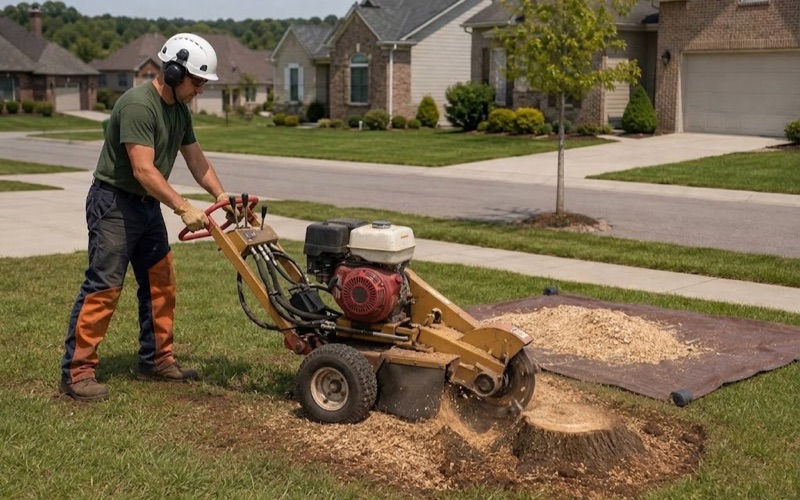
Stump work in Columbia is governed by depth to rock, and depth to rock is not uniform. The Mimosa series, the phosphatic soil of this landscape, formed in clayey residuum weathered from phosphatic limestone and carries solum thickness and depth to rock of 40 to 60 inches - deeper than a grinder rated 12 to 16 inches below grade will ever reach.
Talbott, on the same landscape, runs 20 to 40 inches. That is still below grinding depth, but it is shallow enough to matter to the standing tree, because a root plate developed over weathered limestone at that depth tends to fail by windthrow under load rather than by decay in the stem. Those are two different inspections and two different recommendations.
Mimosa is also described as slowly permeable clay. It holds water at the root plate after a long rain, and saturated clay releases a plate that the same soil would hold when dry, which is why the calls cluster in the days after a storm rather than during one.
Replanting, Home Lots and Grounds Accounts
Where a Replacement Tree Can Go
CPWS bars woody-stemmed plants within twenty feet of poles and equipment. That turns planting something back into a sited decision rather than a free choice: on a lot with a pole near the corner, the location is settled before the species is, and a tree put in the wrong place is a removal somebody pays for twice.
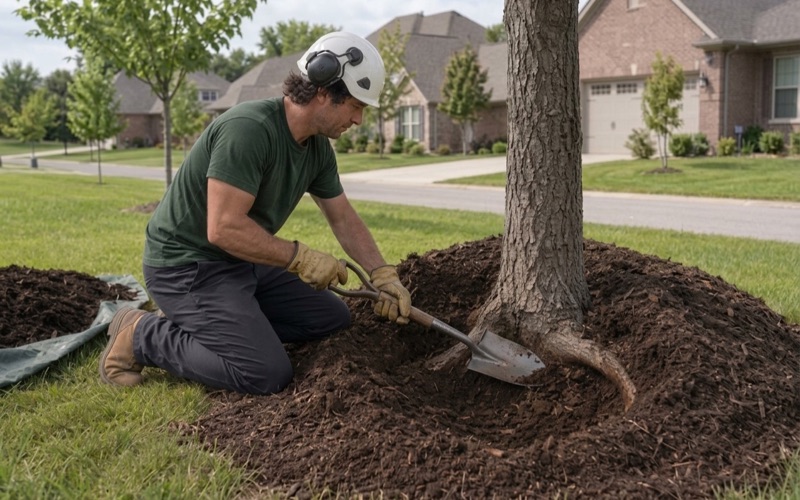
We mark the workable planting area while the grindings are still on the ground, and we say which part of the yard is off the table. It is a short conversation that saves a decade.
Residential Lots
Columbia has 10,501 owner-occupied one-unit detached homes, a figure the American Community Survey publishes as a count rather than as an estimate built out of two other estimates. That is the bulk of what we do here. Roughly a quarter of the city’s housing units - 23.5 percent - were built before 1960, and that is where the largest canopies stand.
Where those trees have grown into the house, we have the crane and rigging capacity for them, and we would still rather tell you that a tree can be crown-cleaned, cabled or braced than take down something that is not failing. If the answer needs to be in writing for a neighbor, an insurer or an architectural review committee, we write a tree condition report you can hand over.
Institutional and Municipal Grounds
Maury Regional Medical Center, the Columbia State Community College campus, Maury County Schools sites and city parkland such as Riverwalk Park at 102 Riverside Drive are grounds accounts rather than yard calls. The work is scheduled around people rather than around daylight, and the utility clearances apply across a campus exactly as they do on a residential street.
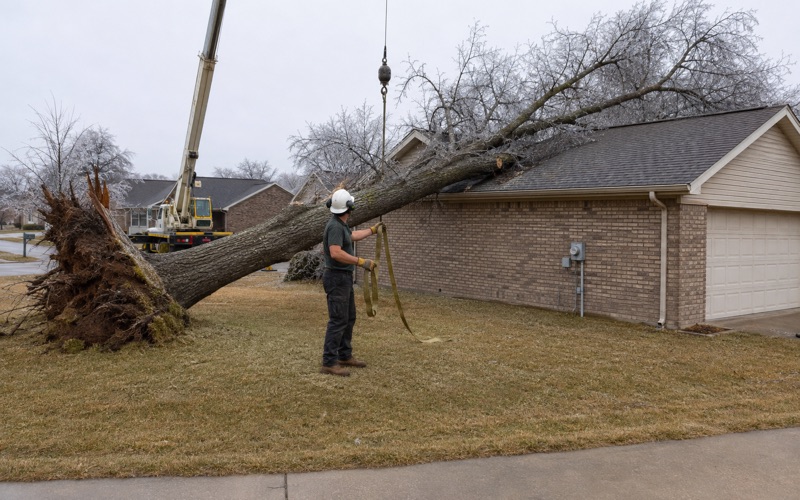
Storm work is planned around what this area actually records, which is ice loading and straight-line wind rather than anything a hurricane script covers. Ice fails limbs by weight, in the crown and over the driveway; wind takes the root plate. We plan for both, and we will give you a straight answer on whether a given tree is worth an insurance claim before you file one.
- 20+ Years in Middle Tennessee
- Free Estimates
- Written Scope Before Work Starts